06
Apr 10

Japan! Initial Thoughts and Photos


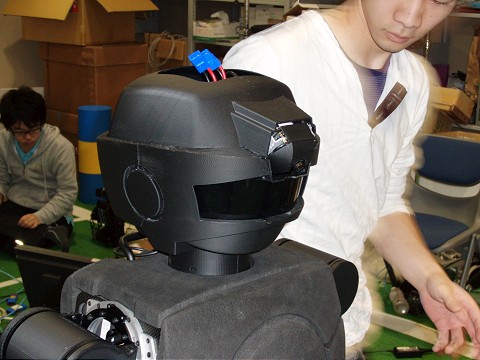
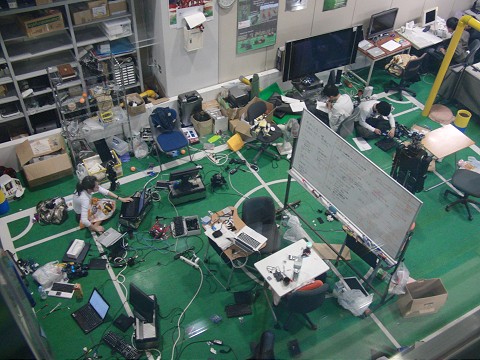
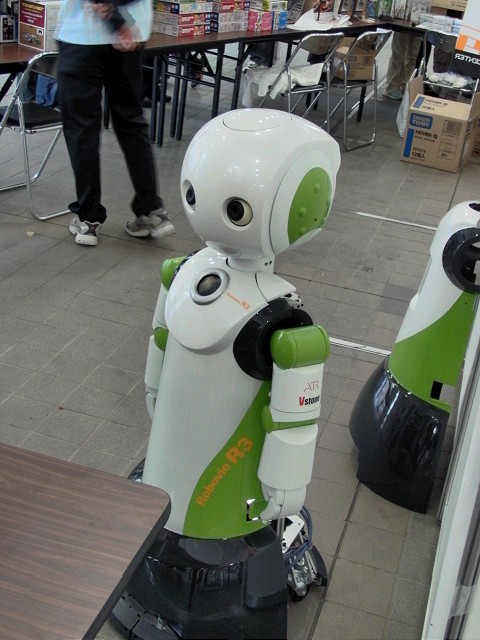
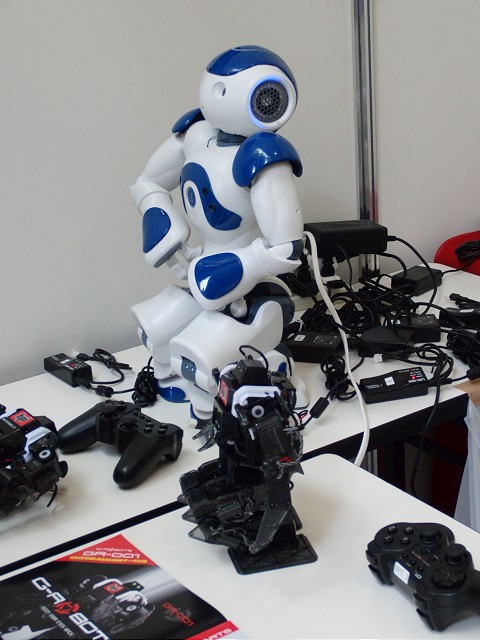
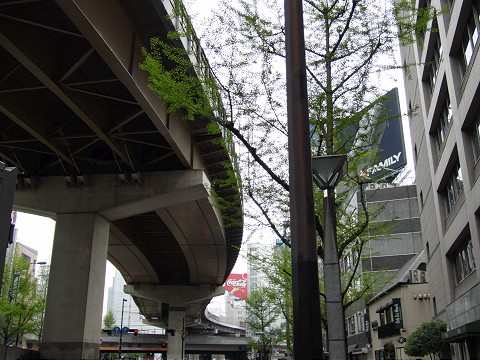
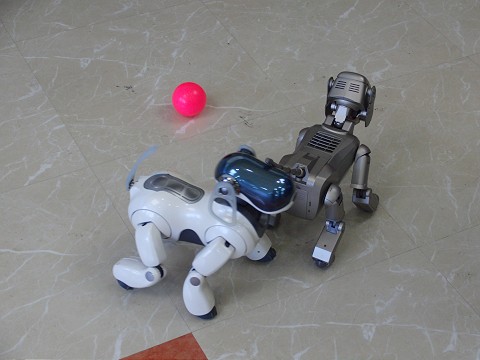
I have been in Japan for almost a week now – so I figured it was a good time to post with pictures, first impressions and so forth. For those of you that don’t know, I flew here last Tuesday for a 6 month stay near the border of Suita and Ibaraki city, where I will be doing research in the Osuka Robotics Lab at Osaka University. I was told that I wold be staying in a suburb of the main city of Osaka, however both Suita and Ibaraki make my home city of Santa Barbara look like countryside by comparison!
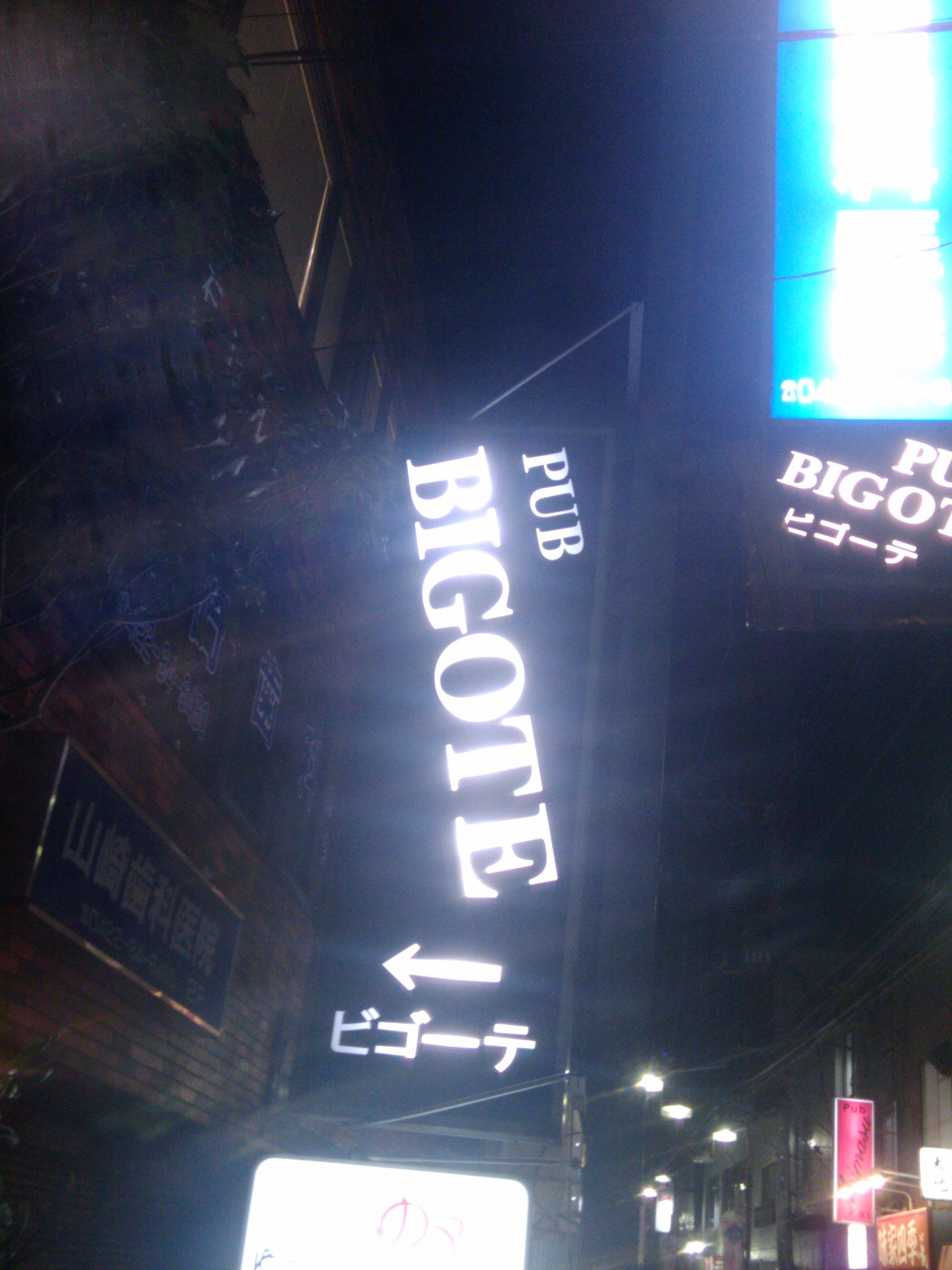
Anyways, after an 11 hour flight from LAX to NRT things went relatively smoothly through customs and I was able to take a train to the gargantuan Tokyo Station then Musashino city, where I stayed at a hotel next to a Mustache Pub.


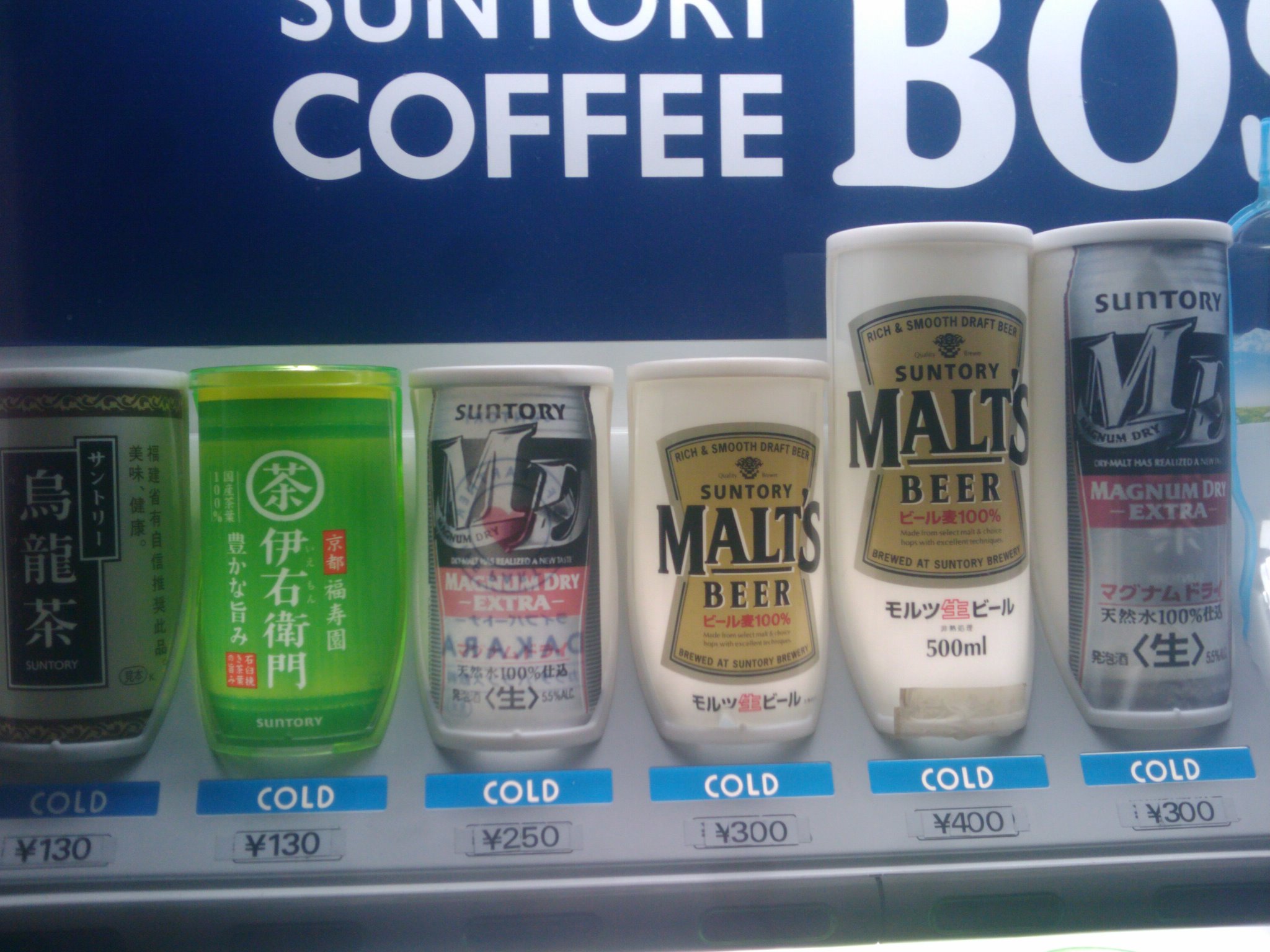
The room was pretty much what I expected of a Japanese hotel room; about the size of a large American closet, with enough room for a small bed, TV, dresser, and bathroom (complete with a toilet that warms your butt and squirts your asshole). Down the hall was one of the fabled vending machines, from which ¥300 could produce a cold BEER! Much less notably (but still pretty cool), vending machines in Japan can provide beverages (mainly tea and coffee) warm as well as cold.


I should also note: sorry that this initial batch of pictures are of such shit quality. I came to Japan under the impression that in Japan there would be unique, new cameras , not [yet] available in the US, and they would be cheap! This is almost entirely wrong. Because Japan has become just as much of a wealthy consumerist nation as we are, camera retailers realized that they could charge just as much , and in some cases more, for cameras in Japan than in the US. The fact that the Yen is now beating the Penny, doesn’t exactly help this. There are still a few models that are only available here, but pretty much everything you can get in the states. If you are going to visit Taiwan it is a different story, but for Japan, bring a camera. Despite this, I am still going to get one (possibly two) eventually, but for now I’m stuck with mediocre camera phone shots.

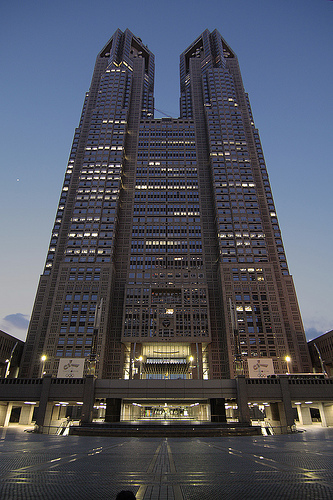
I only had about a day to roam around Tokyo – during which I walked with some friends from Shinjuku station to Roppongi, stopping for food and bouts of Pachinko along the way. We visited the Tokyo Tocho (aka “Tax Tower”) government building observation deck, which had a view that was pretty damn special.


I don’t quite know what to make of Roppongi. Perhaps it is because we were a group of FoB Gajin, or maybe we were just in the wrong spot on a Thursday night.. but anyway, instead of the “active nightlife” we had been promised, we were confronted by a barrage of seedy Nigerian* men attempting to usher us into titty bars. Under different circumstances I probably would have checked out one or two, but if you want to talk about poor choice in advertising medium , I can think of no better example.
*I have no actual way of knowing that these people were Nigerian. As American’s we are taught (mostly through media osmosis) that anything sketchy and African comes from Nigeria.

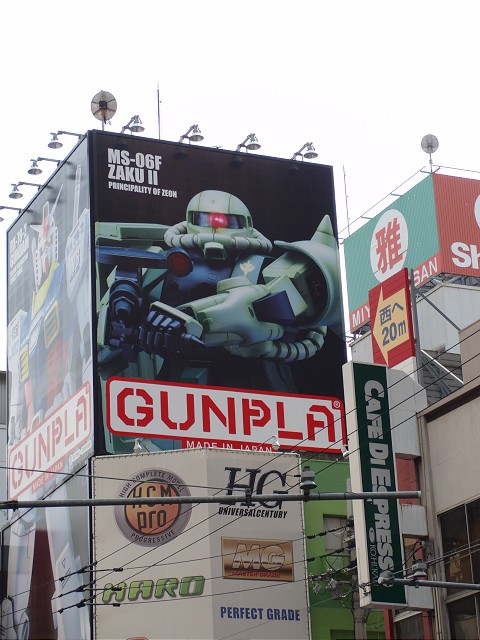
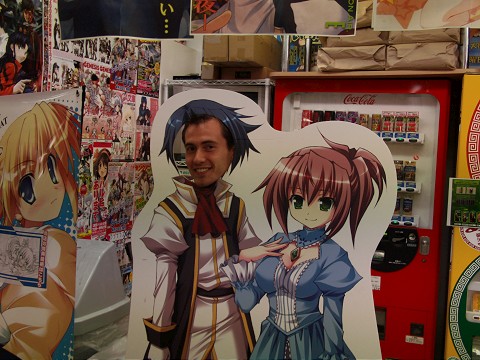
Suffice to say, we split that scene and found nerdy-redemption behind a sign like the sign below:
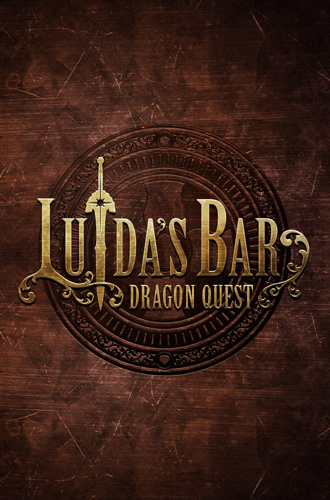


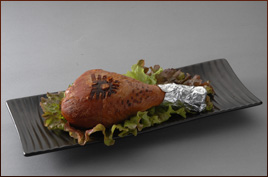
Yes, you read correctly; Luda’s Dragon Quest bar. Complete with costumed bartenders, forever-looping 8-bit gameboy background music, and a menu offering “Right Arm Dragon Ham”, “Meat Slime”, and “Dragon Tail Soup”. It. Was. Awesome.


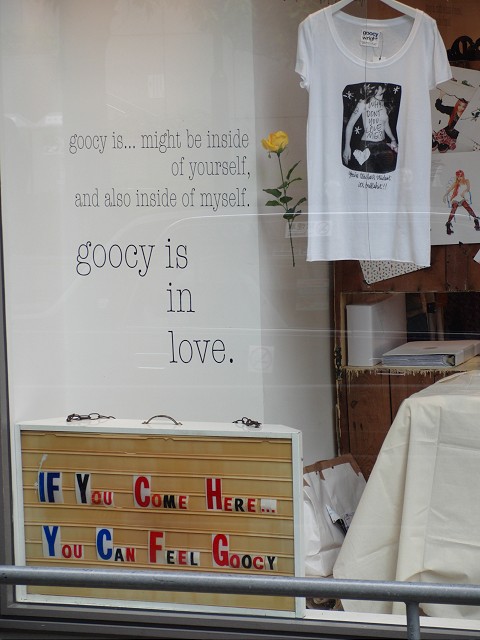
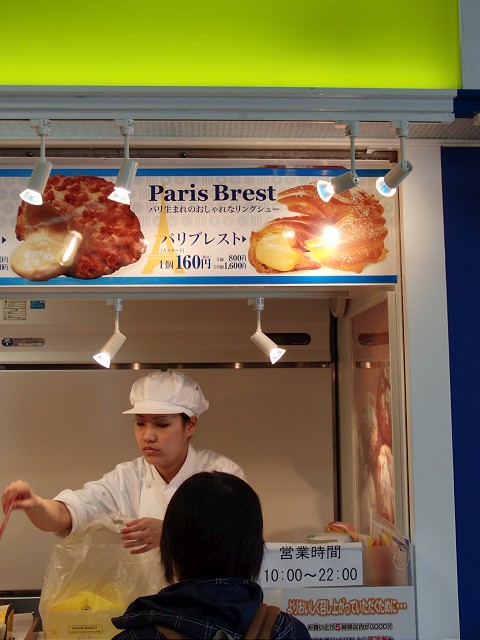
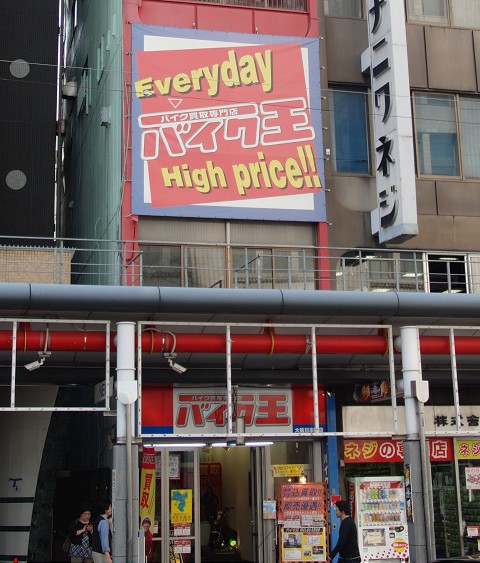
Early the next day we stopped at a big (Target type) department store. Everything was pretty much as I would have expected, except for this:



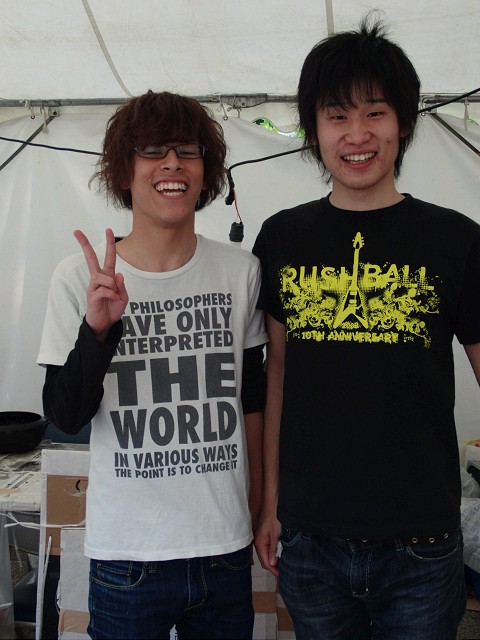
What apparel for my University is doing half way around the world, I don’t know (they also had Cal State Fullerton of all places…) but I have since seen 3 other [Japanese] people wearing UCSB hoodies. I stopped one of them to tell him I was a student there, and I’m not sure he knew that it was a University.. ha! I think it might be somewhat akin to Americans wearing clothing with Japanese/Chinese characters and words because they look cool – not really knowing what they mean. Definitely a tripp.

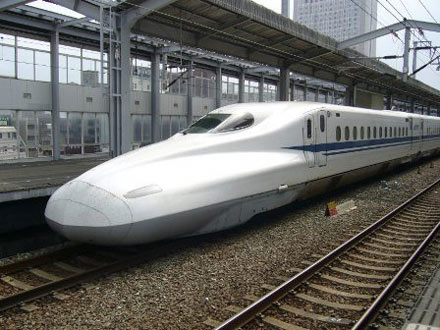
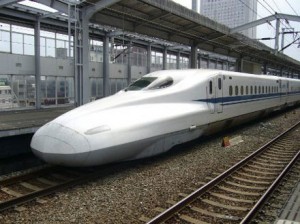
Later in the afternoon we took the Tokyo-Osaka Bullet train. With a cruising speed of 300kph this train would keep up with (if not outrun) most Liter-bikes! Not to mention it runs so smoothly you can hardly tell you’re moving.


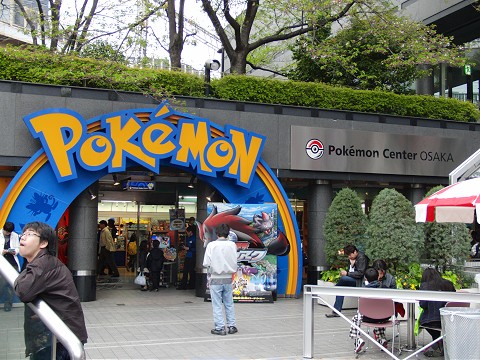
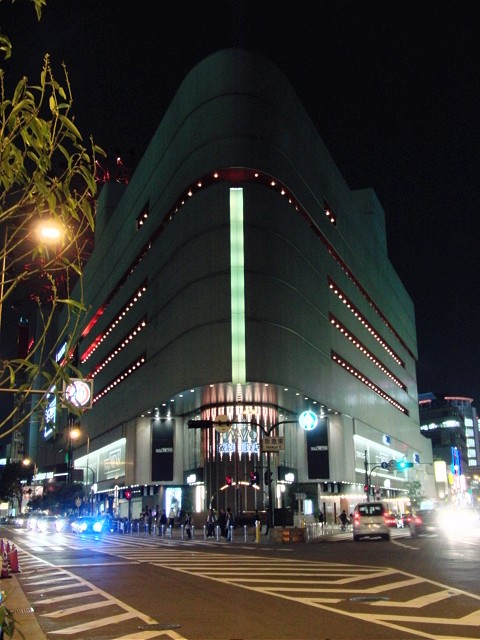
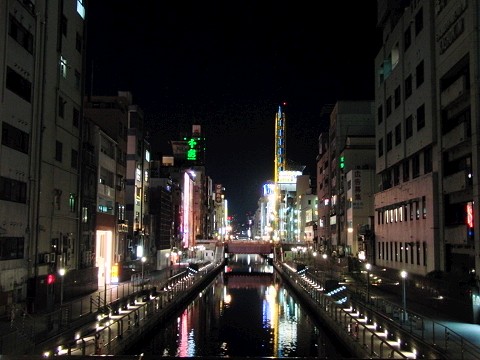
The Umeda district , Osaka City. I can best describe this as a vast spiderweb of an underground and above ground mall, stretching several miles in all directions surrounding (and containing) the main subway station. There were a number of things I found to be pretty amazing in my initial explorations here, I’ll try to be brief and only list a few.
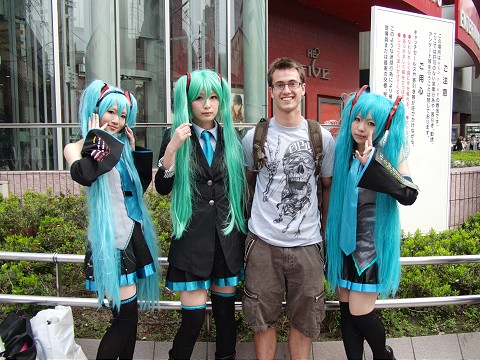
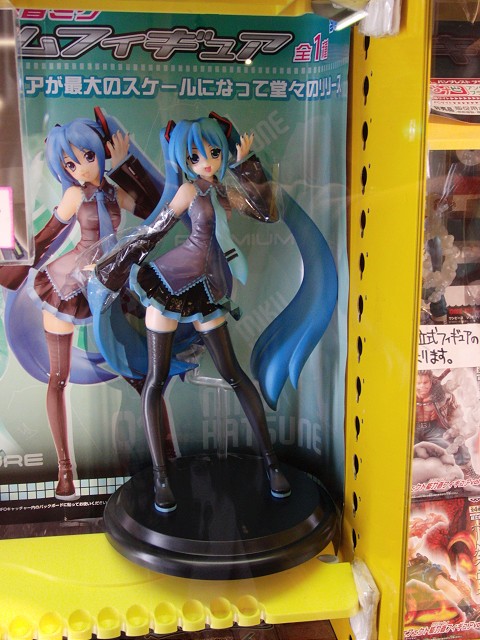
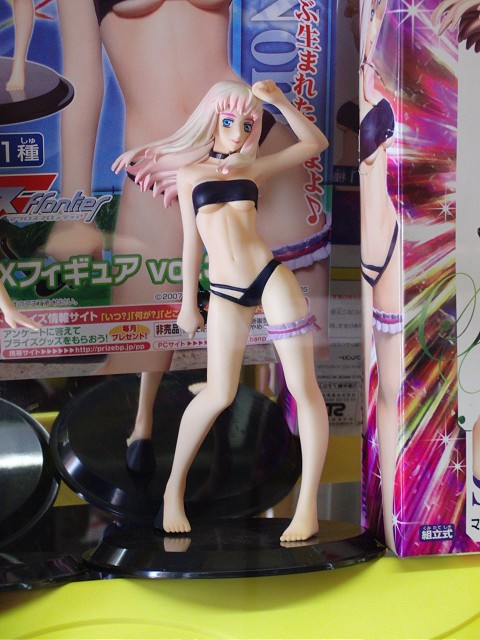
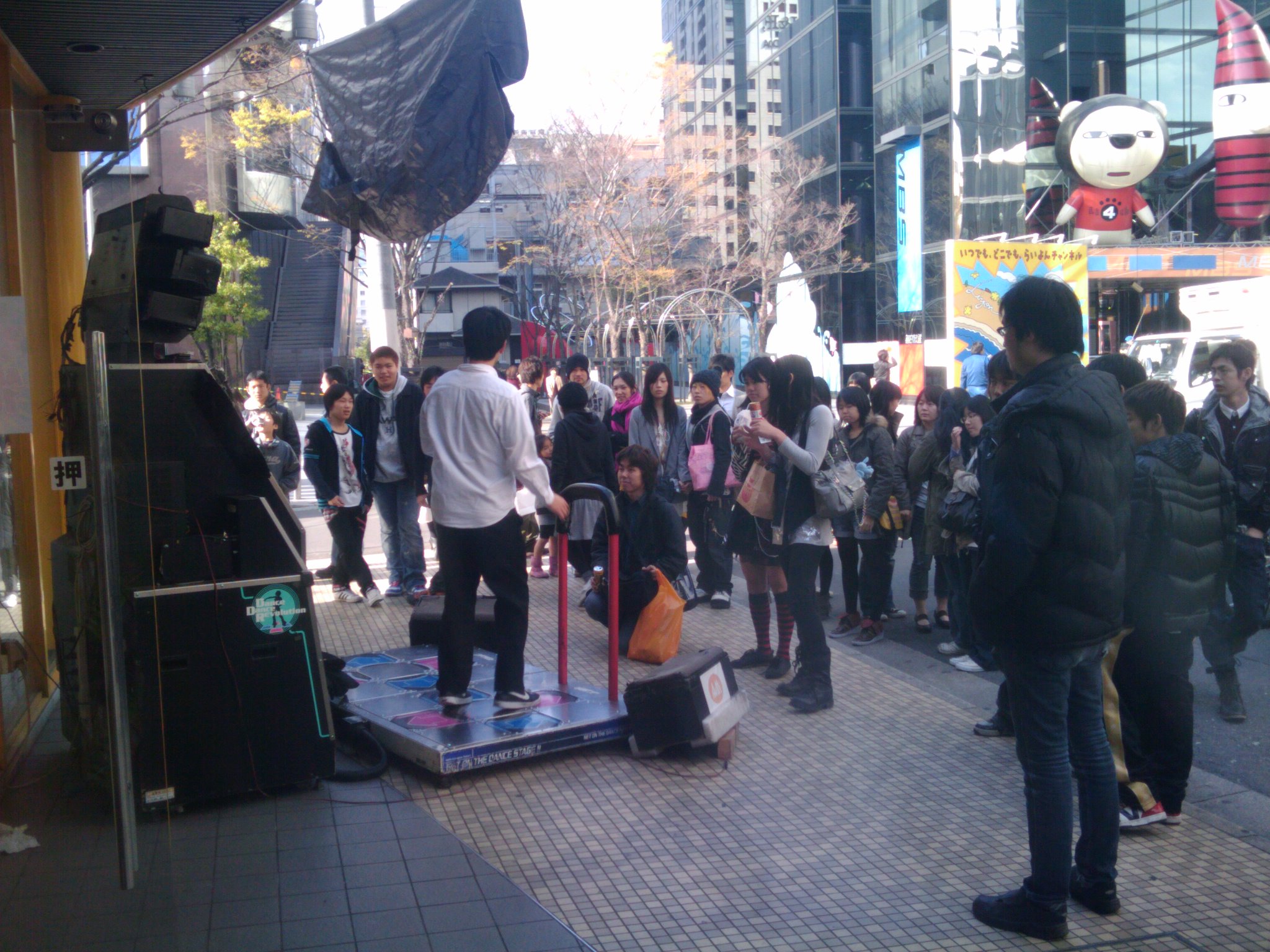
The first of which is the arcades. ARCADES! There are TONS of these scattered about the prime $$$ real estate in Osaka City. With mostly Pachinko, Krane, and Video games, arcades are wildly popular. From hot chicks to suit-and-tie business men, all demographics are represented – not just nerdy teens like in America. As shown below, a good DDR player will draw a crowd on a street corner. He’s not even looking!


The food. Osaka is known as “Japan’s Kitchen” ; the food so far has been absolutely delicious. This deserves an entire post all unto itself – so I’ll hold off for now.

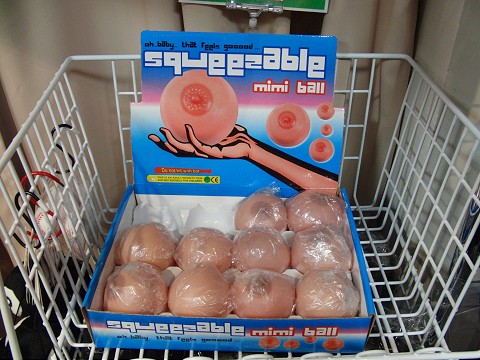
We stopped by a pet store and saw some very unique animals you would be hard pressed to find in America. Even puppies are very expensive here, although they (as was observed) still like to eat their own shit. Some pictures of the animals are posted below:
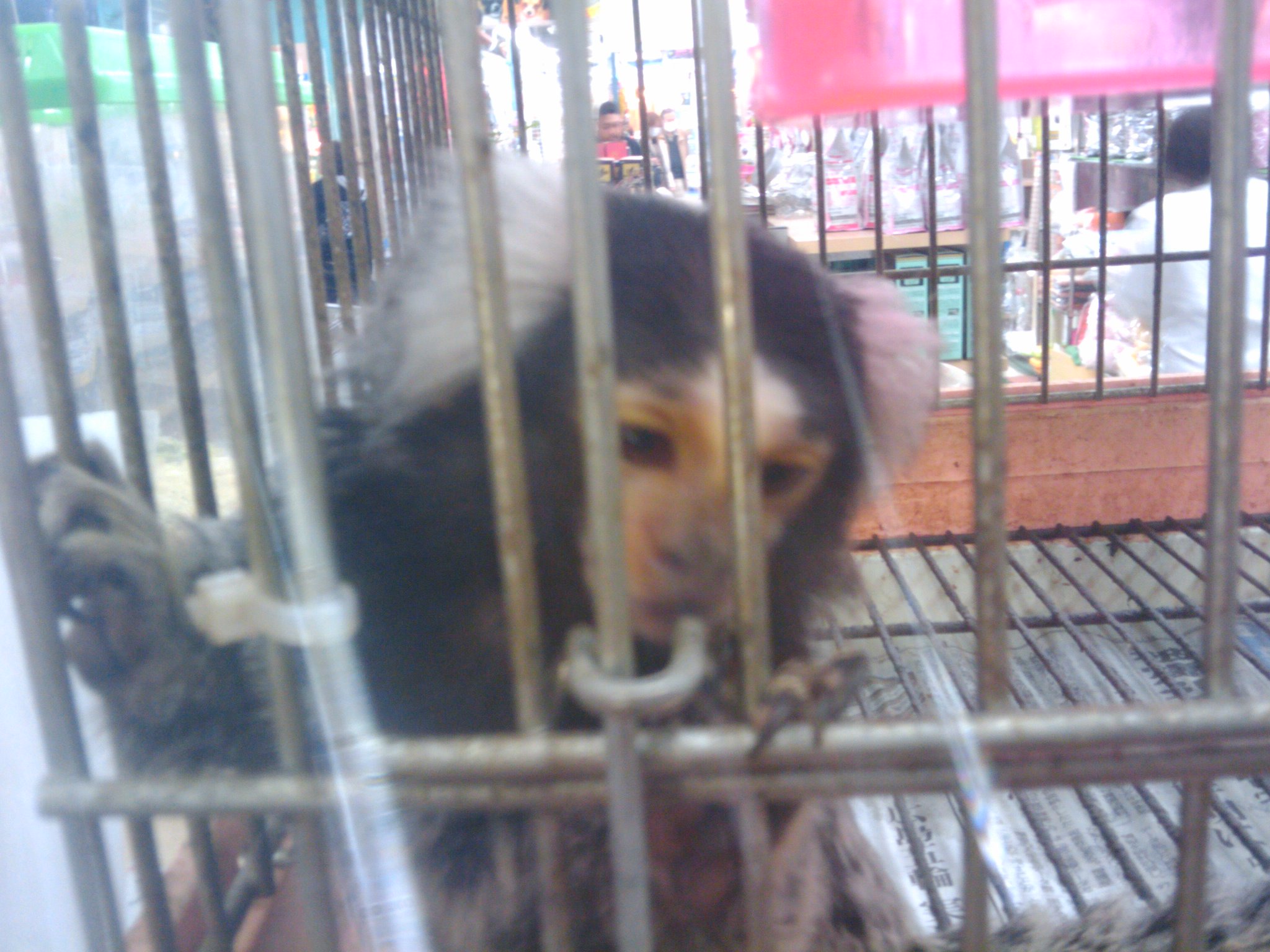
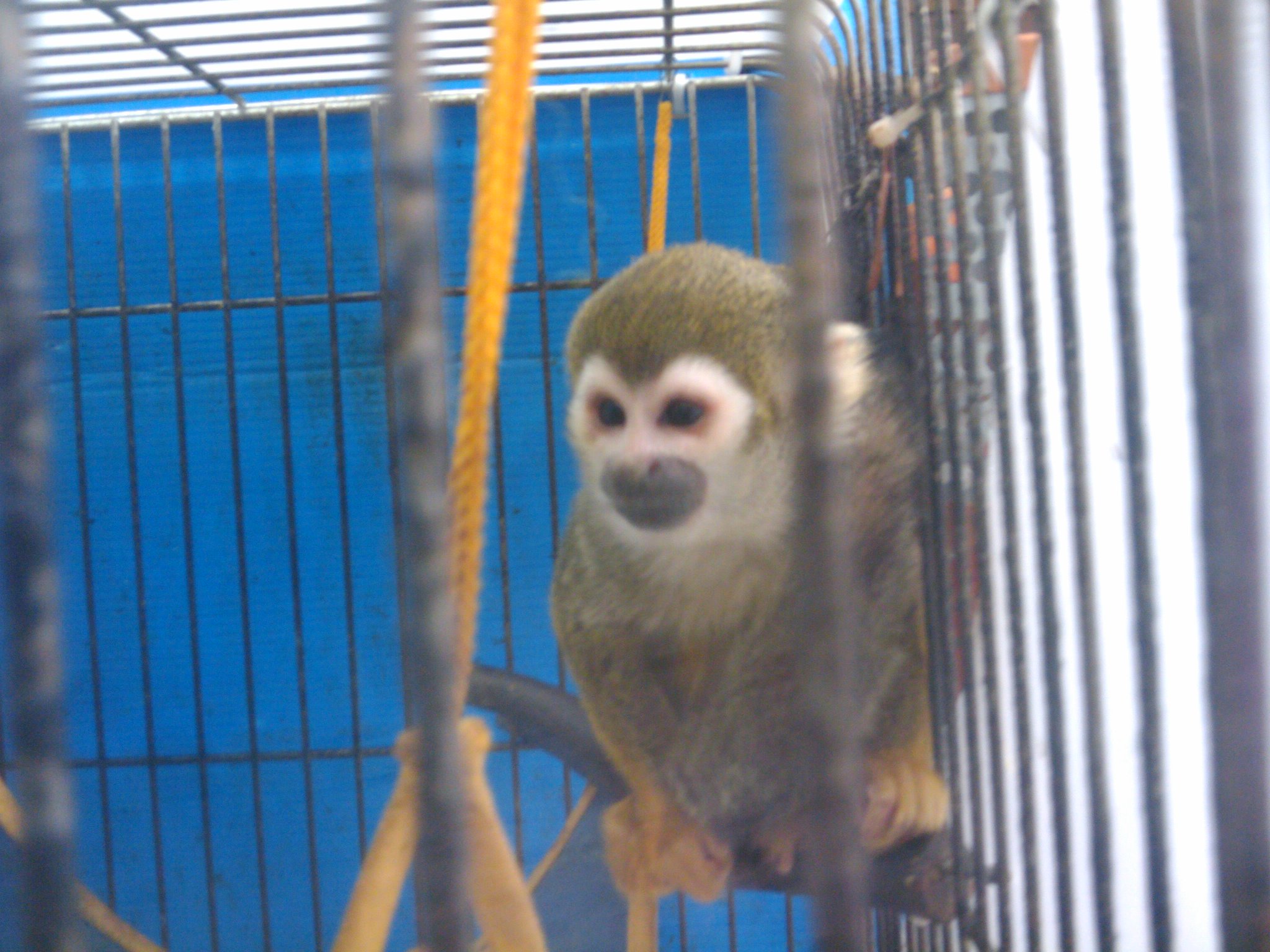
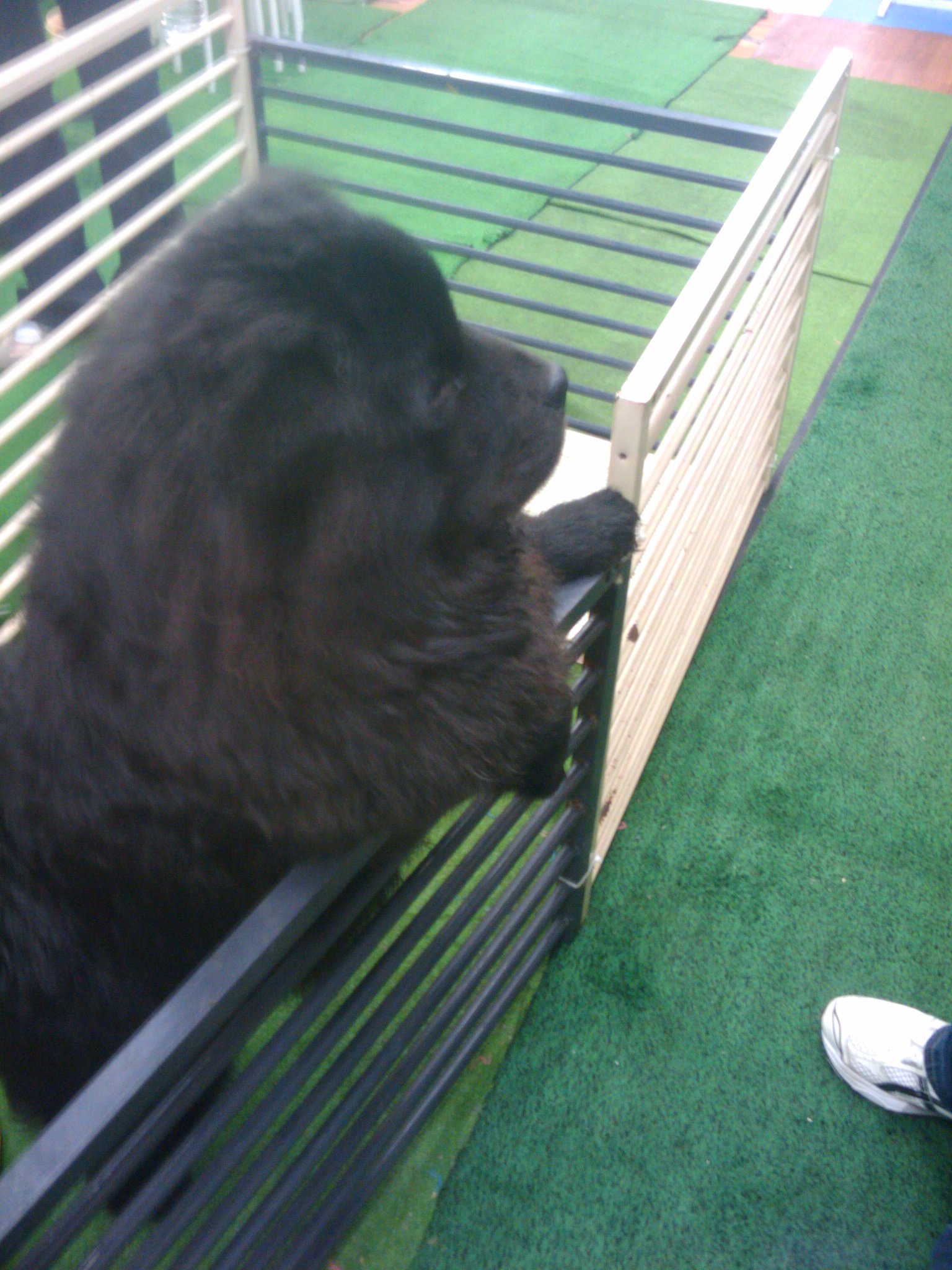


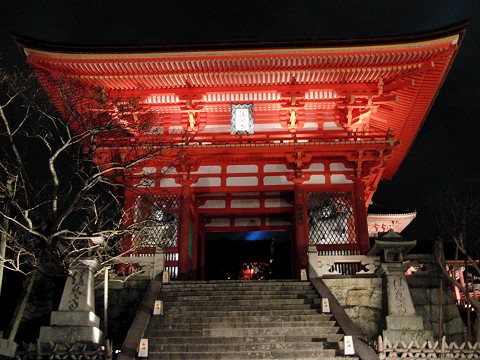
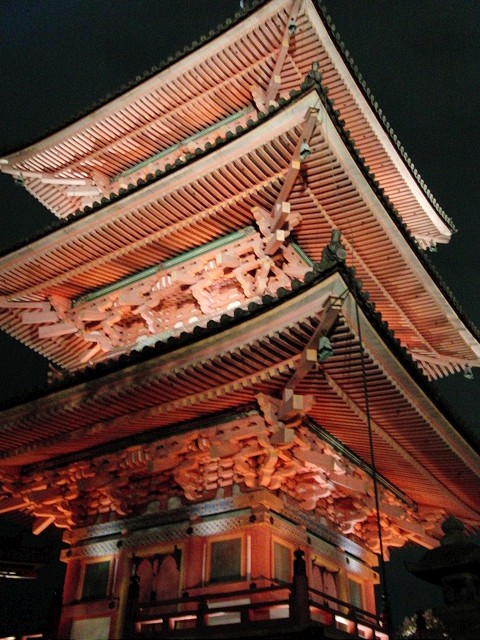
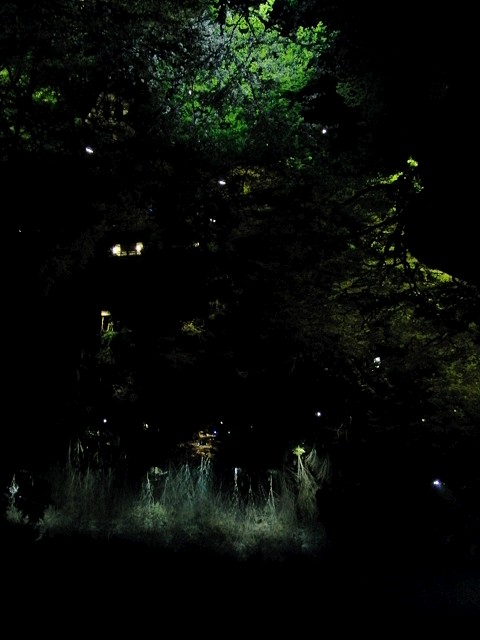
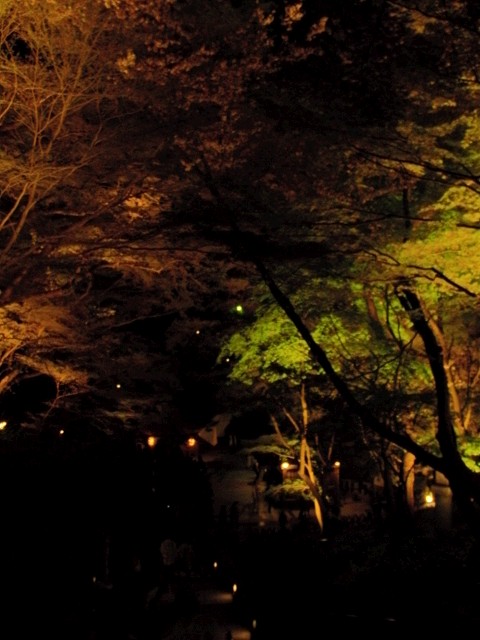
We happened to arrive just as the Sakura (cherry) Trees were blooming. This is a big deal over here, for which the celebration is called Hanami, and involves sitting under the Sakura tree and drinking Sake. We joined [literally] thousands of other people celebrating this in an Ibaraki park on Sunday =)
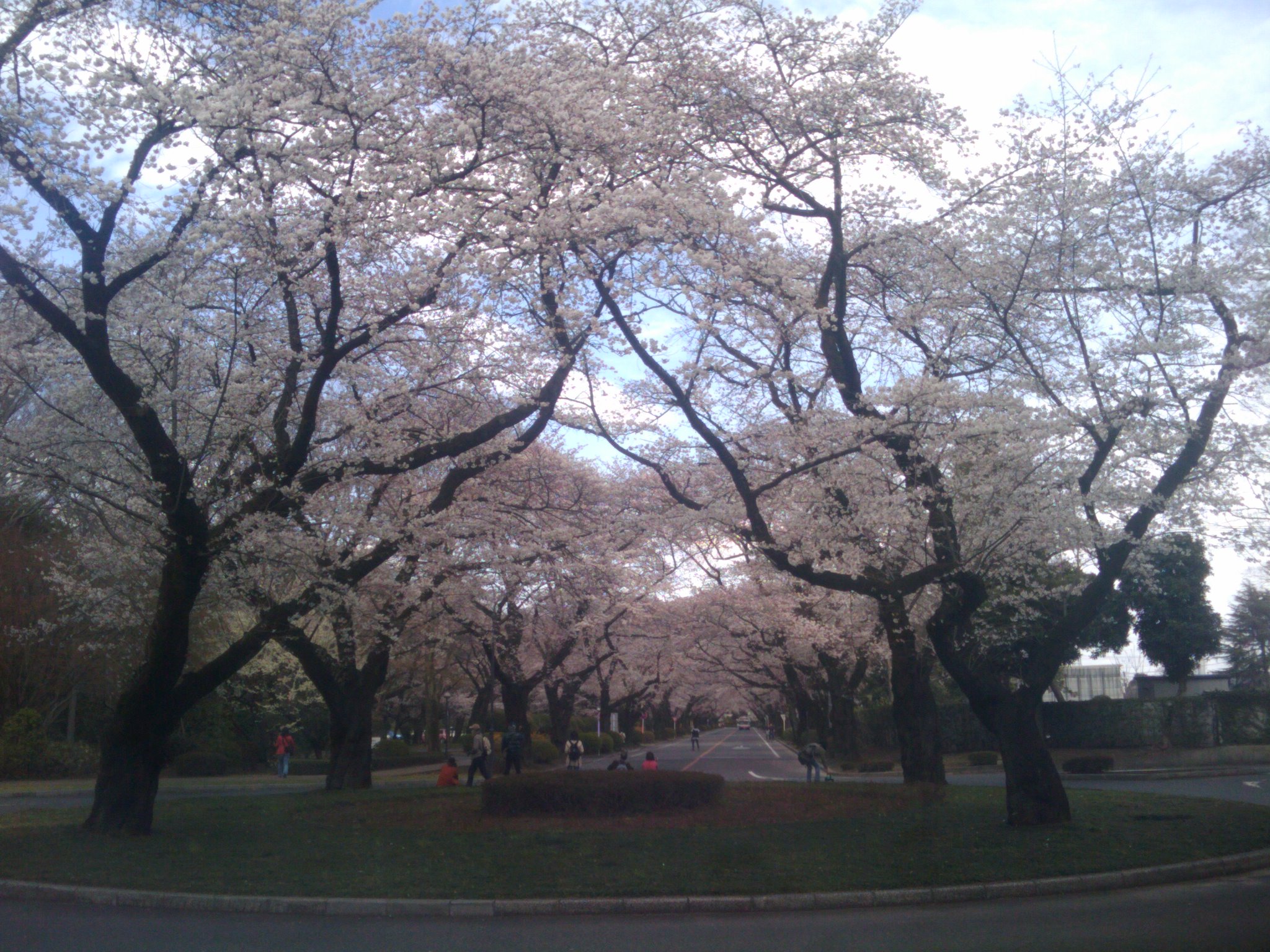


I meet with my Research Supervisor tomorrow, and still have some reading I would like to do, so I’ll cut it off here for now. I’ll do my best to keep this site updated with info on Japan and what I am working with in lab, so stay posted!
18
Mar 10

First 3d Data Visualization


As posted on the as posted on the Media Art and Technology page:


Background:

For the final MAT259 project, students create a 3D interractive data visualization using data collected as part of the Seattle Public Library project (link).


Concept:

The idea behind this project was to create a 3 dimensional interractive data visualization which would provide users with an effective and visually pleasing format to explore relationships between different item formats (eg. Book, CD, Magazine), the day of the week, time of day, and duration for which they are checked out.


Modes and Operation:

There are several modes, and methods of control which can be accessed by hovering over the "CONTROL" pane in the bottom portion of the screen. A list and brief description follows:

SLIDERS

  • zoom – zooms the camera in and out
  • opacity – adjusts the opacity of the the graphics displayed
  • background – changes the background linearly from back to white
  • animation speed – adjusts the speed for animation (when in animation mode)

CHECKBOXES

  • spherical – maps plotting from cartesian to spherical coordinates (time of day to θ, day of week to ρ, and checkout duration to radius)
  • log – uses logarithmic function to compress checkout duration, and make data more viewable
  • animate – animate by interpolating between consecutive check ins
  • axis – display x, y, and z axis
  • labels – display lables to allow for a more quantative analysis of the data presented
  • lines – display lines connecting the dots which represent individual transactions

BUTTONS

  • previous – view previous item format
  • next – view next item format


Acknowledgments:

The UCSB MAT program, Professor George Legrady, T.A. Reza Ali, Ben Fry, and everyone behind the developement of the Processing language as well as the PeasyCam and ControlP5 libraries.

28
Feb 10

Some DAC fun

image

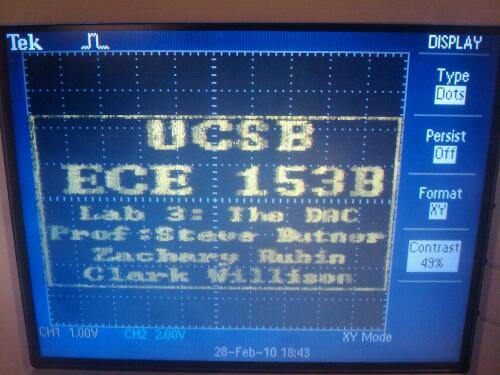
My sensor peripheral interface design lab has us working with a 4 channel DAC. The requirements are to make a sine and triangle wave- but since those are kinda boring I thought id do some experimentation in XY mode :)

24
Feb 10

Future Plans 2/24/10


-Mar 30 leave for OSAKA


-Upgrade to lithium packs?


-Hottub Monitor


-Interactive ‘rave’ visualization


-Study!

24
Feb 10

Motorcycle Ride Profiler


[EDIT: ZOMG. rotation matrices are awesome. wish I understood those when I first started this... ]
  

[EDIT 2: Google released an Android app that does much of this based on your phones accelerometer/gps. i feel discouraged. best to just move on i suppose.]


My current Microcontroller project is a data logger that keeps track of position, velocity, and acceleration of a motorcycle. It will use this information to generate a visualization of the ride , presenting the raw figures , as well as lean angle, incline, and engine rpm which can be extrapolated as follows:


Straight Standing FBD

Straight Standing FBD


Calculation of the lean angle


Calculation of the incline angle

Calculation of the incline angle


Determining lean angle when at an incline is somewhat more complex.. and I have yet to sit down and work through the math – but ill be sure to post as soon as I do. And of course , as it doesn’t have (but probably should get) a gyro, these only apply to the static case. I’ll probably need to get clever in the code to figure to approximate out angular rate without gaining too much error


Engine RPMs will be calculated by performing an FFT to convert the acceleration magnitudes to frequency domain, band pass filtering (between ~8 and 300 hz I expect) to isolate the noise created by the exhaust and/or the engines power strokes. This frequency information will be examined and the range with the most energy will be assumed to be from the engine’s rotation.


where I am now:
I have the uC hardware together and logging data (pictured below) the next step is mounting it to my bike and reving the engine to collect data so that I can see if my ideas on RPM determination are valid. Schools been busy lately, so this may have to wait.. but stay posted!
Motorcycle Profiler Hardware

Motorcycle Profiler Hardware

Calculation of the lean angle


Continue to Future Plans

24
Feb 10

Chuglet!

Inspired by our hosting of the 2010 Fermi Cup (A graduate Electrical&Computer Engineering vs Materials Engineering keg off) I decided to throw together an appropriately geeky microcontrollered beerbong installation at the bottom of our staircase
This was a good first way to break in my shiny new mbed microcontroller, as well as to continue flirtations with the Processing language.
Pics Below:


Continue to Ride Profiler

24
Feb 10

W10


In LOVE with all my courses – how it should be.


ECE 153b – Sensor Peripheral Interface/Design
More on hardware description languages; field-programmable logic and ASIC design techniques. Bus interfacing. Mixed-signal techniques: A/D and D/A converter interfaces; video and audio signal acquisition, processing and generation, communication and network interfaces, basic motor control (PID).
Currently working on a circuit/program which acquires an signal via ADC, and replays it over DAC. Full Lab Report coming soon!


ECE 181C / ME 170C – Intro to Robot Control
Overview of robot control technology from open-loop manipulators and sensing systems,
to single-joint servovalves and servomotors, to integrated adaptive force and position
control using feedback from machine vision and touch sensing systems. Design emphasis
on accurate tracking accomplished with minimal algorithm complexity.

21.7 second Wall Following bot:


RoboRat Solo Time Trials Tomorrow!
RoboRat Final Competition W2010


ECE 130B – Discrete Time Signal Processing
Analysis of discrete- and continuous-time linear systems in the time and frequency
domains. Superposition and convolution. Bilateral and unilateral Laplace and Z
transforms. Fourier series, Fourier transforms, discrete Fourier transforms. Filtering,
modulation, and sampling. — Usefull Stuff!


MAT 259 – Information Visualization
Exploration the visual organization of information. Lectures, readings and technical demos will focus on a range of conceptual models of data visual mapping as implemented in various disciplines, artistic, statistical and scientific, that are used to represent information visually.

-2D Spatial Visualization link

-3D Interactive Visualization
Coming Soon!

Continue to Chuglet Project

24
Feb 10

F09


Classes kinda boring this quarter.


not inspiring.


Continue to W10

24
Feb 10

ECE 94R


So as you know, during the 2008-2009 school year I chaired the UCSB IEEE club.
Through an interesting chain of events, I was asked, through the IEEE club, to direct a 2 unit lower division course in µCs.
I had just learned about the Arduino platform, and , although basic, seemed to be ideal for an freshman introductory microcontroller course.

Course Syllabus/ Outline shown below:


Some of the Final Project posters – also posted on the 4th floor, HFH:


For Spring 2010, Bob Frankel will be taking over/evolving this course into ECE 194 which be upper division and incorporate his EM language. This is very exciting! Stay posted for updates!

Continue to F09

24
Feb 10

S09


- Physics 15 lab – FerroFluid Fountain!


FerroFluid Fountain


This was quite a fun project; completed as part of the honors/ccs physics lab series in which students are commissioned to design and build a physics demonstration for use with undergrad lectures. The basin holds ~60 ml of the ferrofluid which is sucked into the middle, pulled to the sides, or drawn up the centerpiece by electromagnets whose field can be manipulated to be constant or exhibit patterns dictated by the array of buttons/knobs mounted to the front panel. I should really upload a picture of the whole unit.. Anyway, this also resulted in my group and me being invited to show it off on behalf of ccs at a benefactor’s event – and man do they feed people at those events well :)

FerroFluid Fountain! from Z R on Vimeo.


- ECE 152b Digital Design Methodologies - like being GOD!
Build a 4-bit RISC Computer!! Register Transfer Level Design, Clocking, b bus architectures, pipelining, control units, memory systems, microcoded systems.

Continue to ECE94R

« Older Entries
Newer Entries »

RST RST

r/w_ blog : 05-20-2012
powered by WordPress